
Taurus RPC Review: 300+ Rounds With Taurus’s Roller-Delayed 9mm PDW
Dive deep into the Taurus RPC’s soft-shooting roller-delayed action, modularity, and design nuances. We uncover why it’s a must-watch PDW for PCC enthusiasts.

Written By
Michael Crites
Licensed Concealed Carry Holder
Reviewed by
Editorial Team
Learn About The Editorial Team
Share:
Products are selected by our editors. We may earn a commission on purchases from a link. How we select gear.
Updated
Nov 2026
I’ve been shooting the Taurus RPC for several months, and I’m past 300 rounds of mixed 9mm through it, much of it suppressed. I had no ammo-related malfunctions; the only stoppage I had was a charging handle that fell out mid-string, and I’m confident that one was my fault (more on that below).
Here’s the short version of this Taurus RPC review:
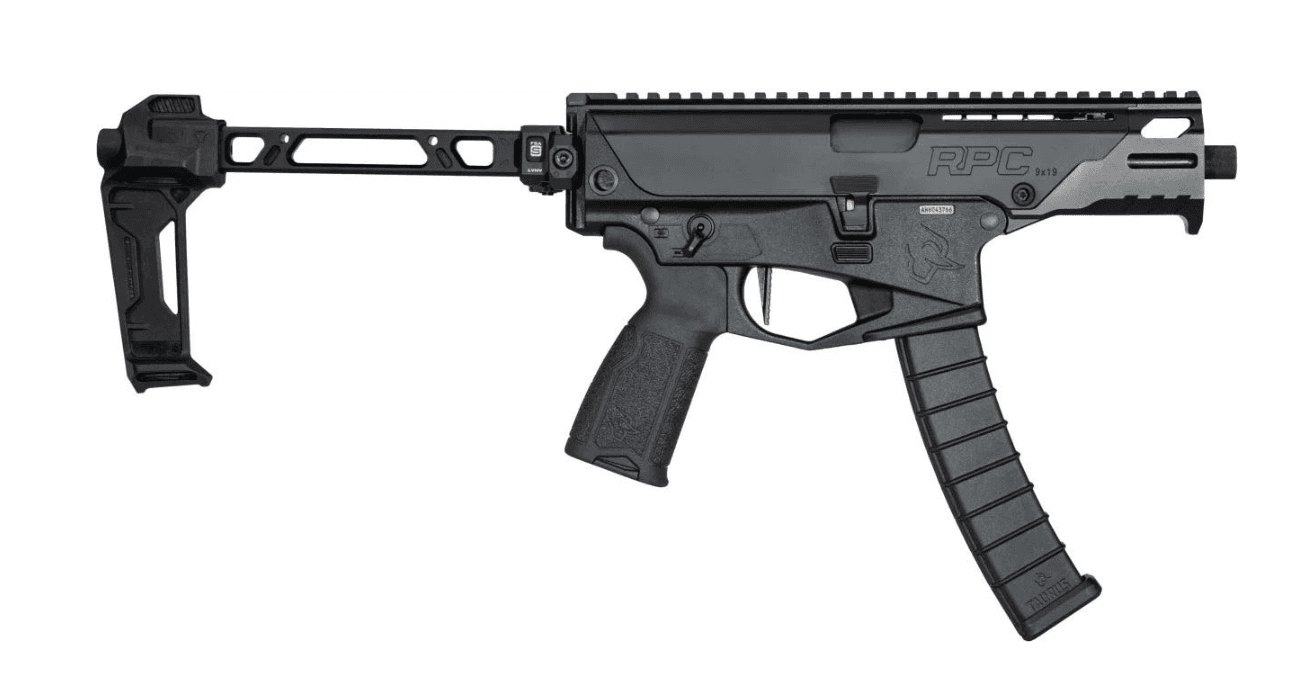
- What it is: A 9mm roller-delayed blowback PDW with a 4.5-inch threaded barrel, a 32-round proprietary magazine, and fully ambidextrous controls.
- What it does best: It’s soft-shooting, compact, and an excellent suppressor host — it ships with a second locking piece specifically for suppressed use.
- What it costs: Taurus launched the RPC at $939 without a brace and $1,099 with the Strike Industries folding brace (it currently lists the braced 10-round model at $1,154.99). Street price is already well under MSRP — the braced 32-round model has been listed in stock for about $795–$850, with a few retailers dipping as low as the mid-$770s.
- The catch: Proprietary magazines with no aftermarket options yet, and a charging handle that takes more effort to pull than I’d like.
If you want MP5-style roller-delayed shooting for well under $1,000 street, the RPC is the best value I’ve put rounds through in this category. It’s not a hunter’s gun or a precision tool, and it doesn’t pretend to be — it’s a complete, compact defensive package.
In This Article
What Is the Taurus RPC?
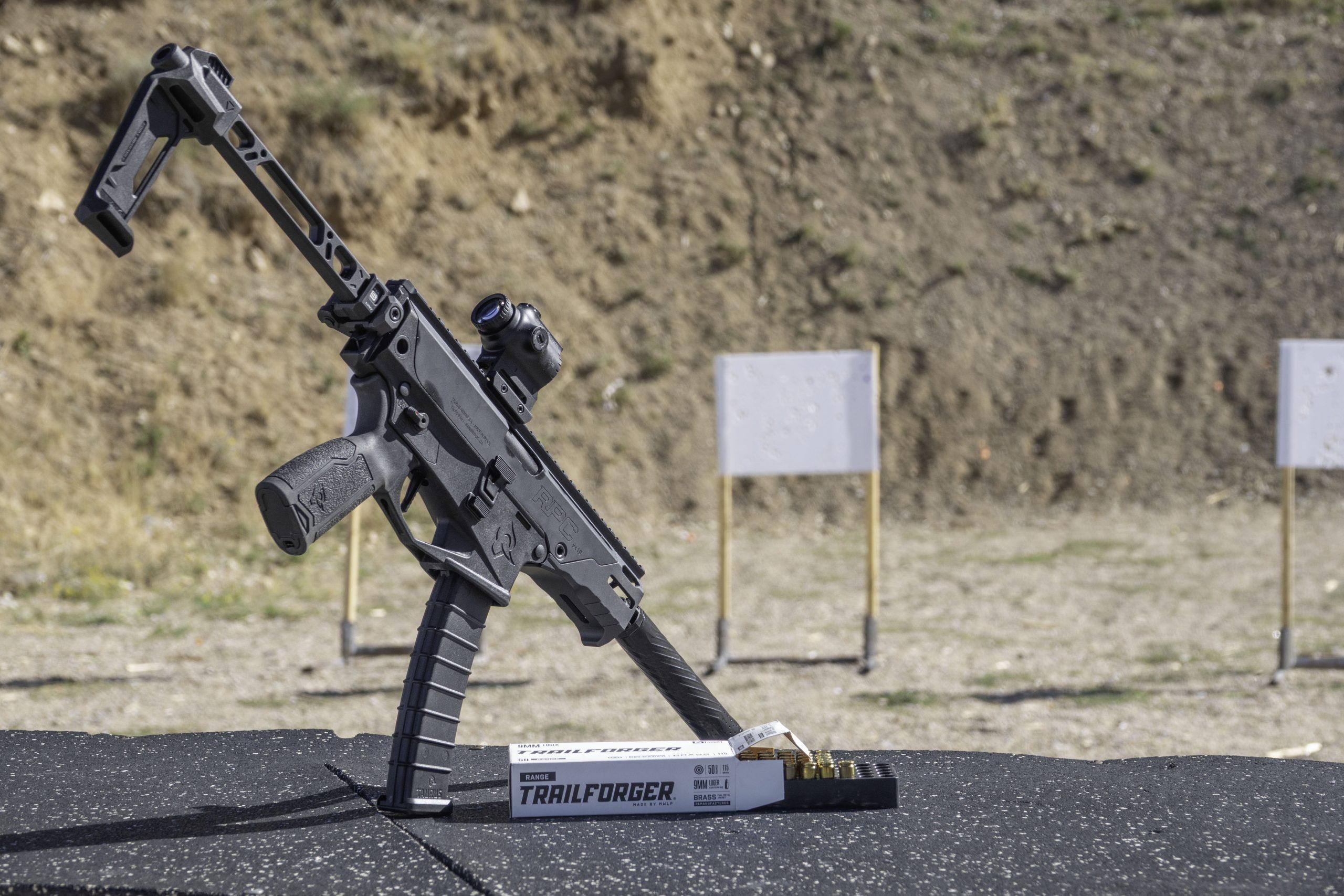
The Taurus RPC is a 9mm personal defense weapon (PDW): a compact, high-capacity firearm built for close-quarters defense. It sits in the same market space as the CZ Scorpion, Springfield Armory Kuna, MP5-pattern guns, and many AR-15 pistols, but it’s priced well below most of them.
Taurus built its name on affordable pistols and revolvers, and the RPC is the company’s most ambitious long-gun-style design yet. The PDW concept itself has military roots — compact guns built for vehicle crews, support troops, and others who need more than a pistol but can’t carry a full-size rifle. The MP5 became the benchmark for that role in military and law enforcement use, and before it, guns like the old Colt 9mm SMG showed American shooters what a short, controllable 9mm carbine could do.
The RPC takes the roller-delayed MP5 formula and packages it as a lighter, simpler, more affordable civilian pistol.
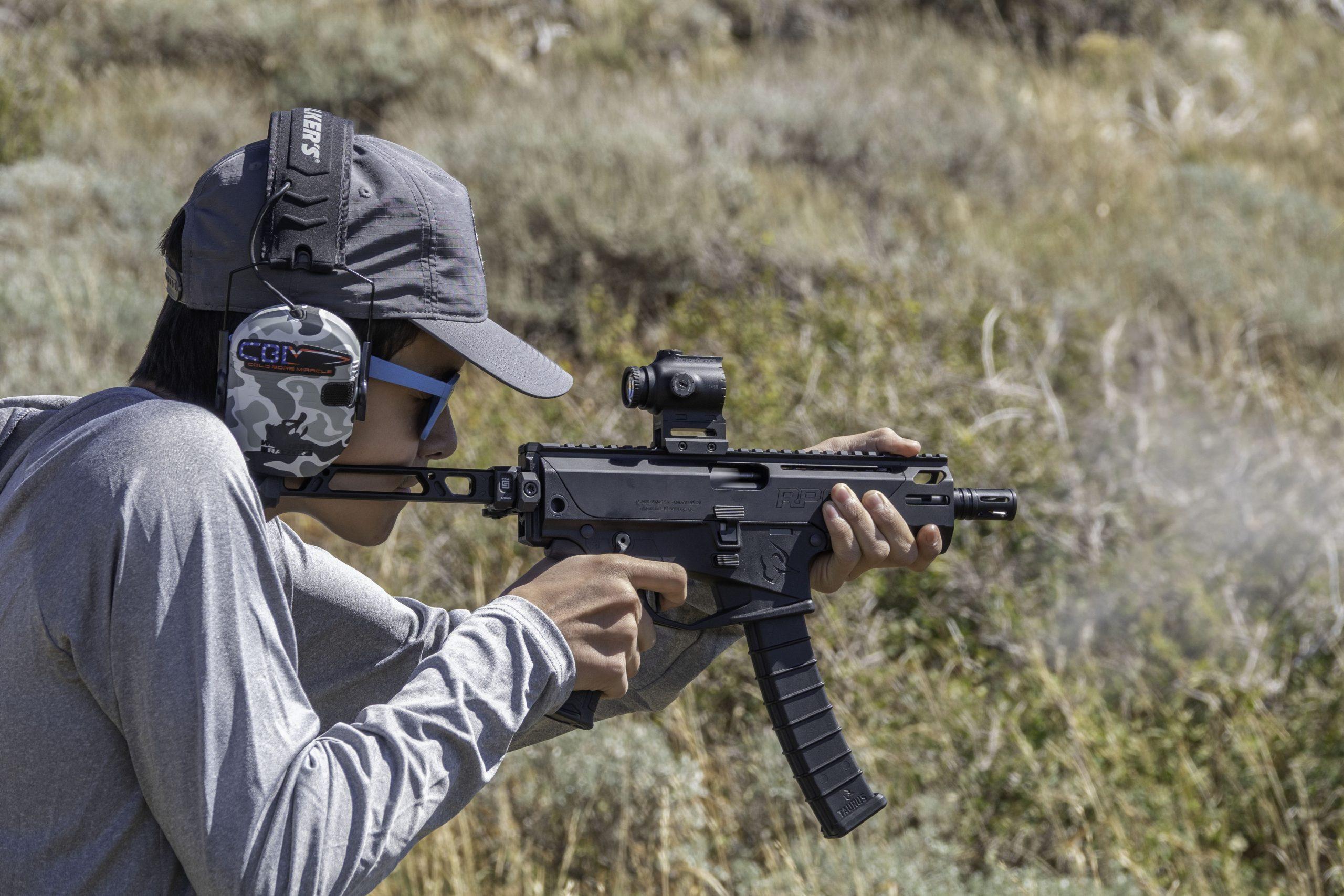
Unlike some PDWs sold as a “pistol” that are really only usable with a brace, the RPC is small and light enough that it can actually be shot like a large handgun. That’s not how I’d run it most of the time, but it tells you how compact this platform is.
Who Should Buy the Taurus RPC (and Who Shouldn't)
Buy it if:
- You want a roller-delayed 9mm without paying MP5-clone or SP5 money.
- You plan to run a suppressor — this is the RPC’s strongest use case.
- You want a compact home defense gun that a smaller or newer shooter in your household can handle.
- You’re left-handed. The fully ambidextrous controls aren’t an afterthought; every primary control works from either side.
Skip it if:
- You want to share magazines with another gun you already own. The RPC’s mags don’t fit anything else.
- You need a deep aftermarket today — handguards, barrels, and alternate calibers are still coming.
- You have weak hand strength and struggle with stiff charging handles.
How the Roller-Delayed Action Works
If you’re curious what “roller delayed” actually means, here’s the plain-English version — and why it should matter to you before you buy.
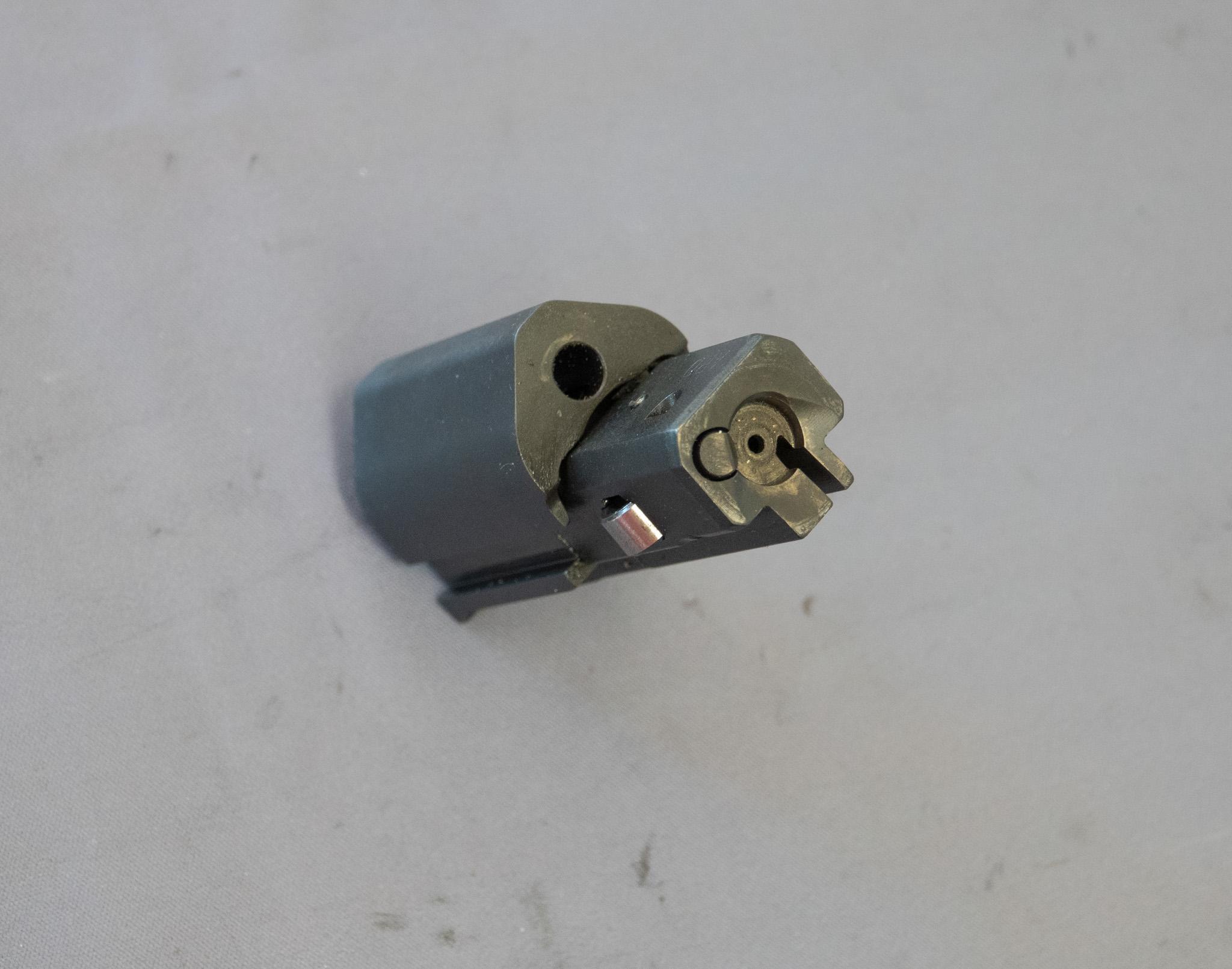
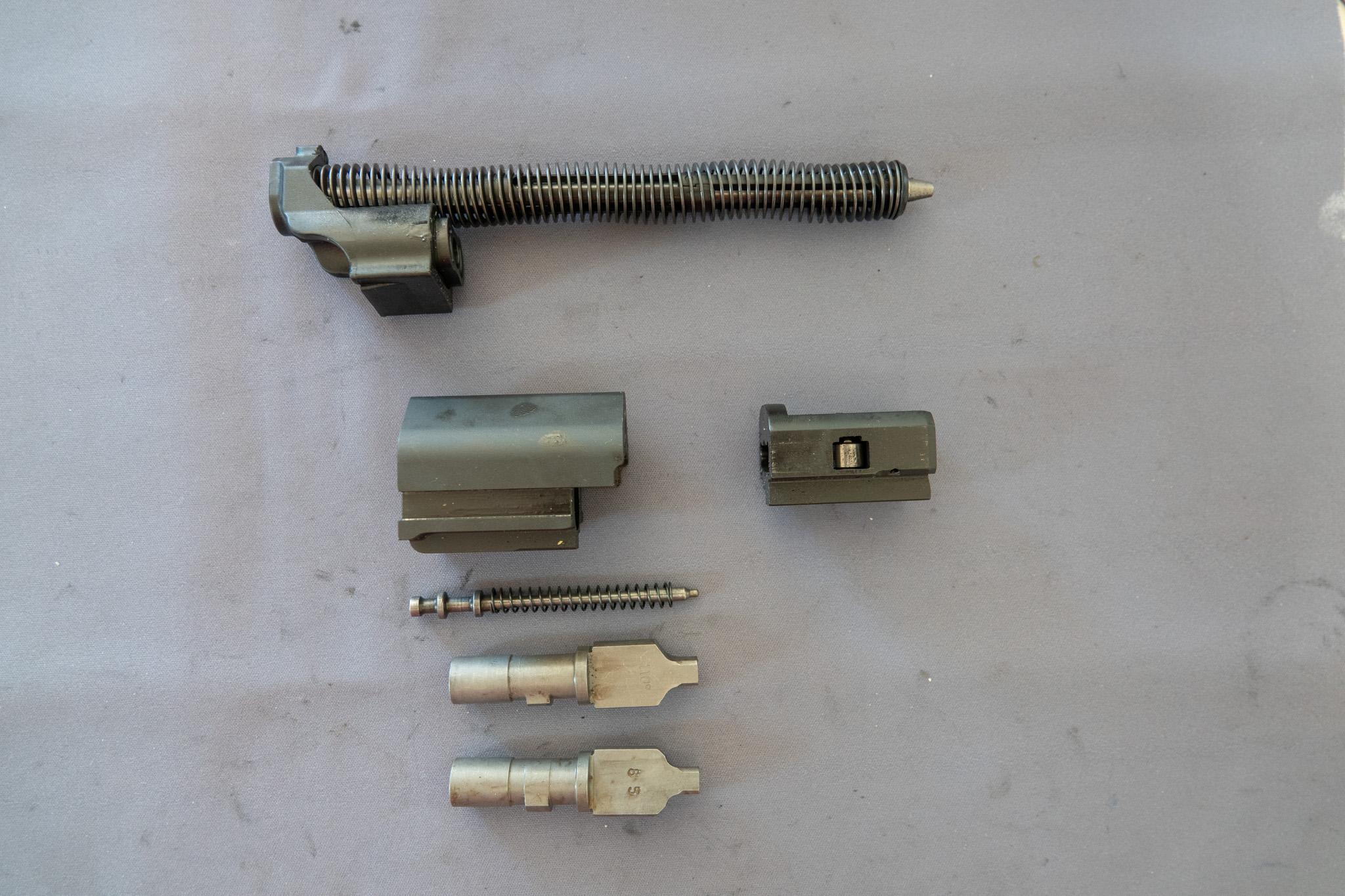
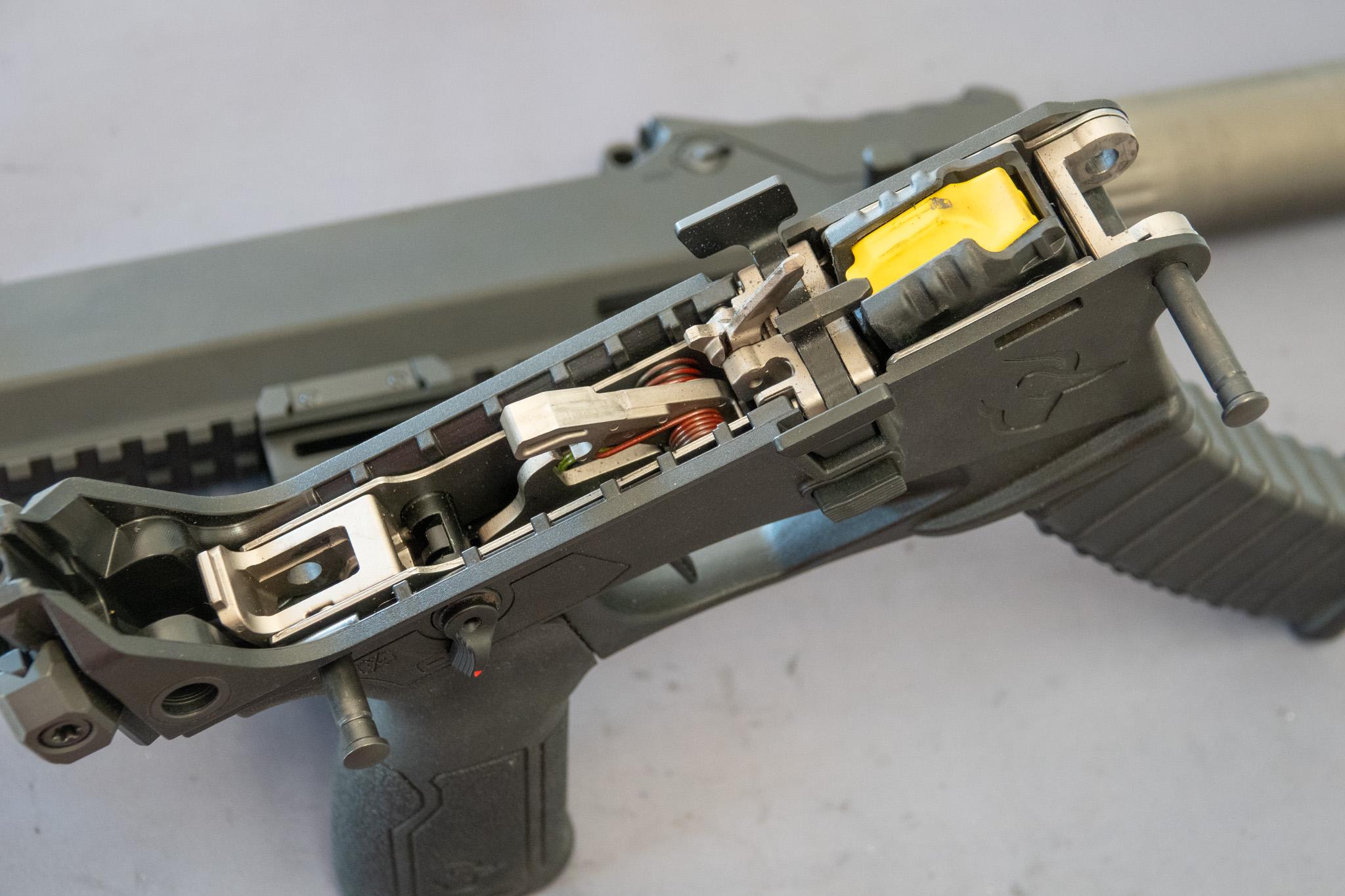
The design comes from Heckler & Koch, the German firm behind the MP5 submachine gun. Inside the bolt carrier are two rollers mounted vertically. When the bolt closes, a wedge-shaped locking piece slides forward and pushes the two rollers outward into recesses in the trunnion.
When you fire, pressure pushes back on the bolt head. Before the bolt can open, the rollers have to be cammed back inward against that wedge. That mechanical disadvantage adds dwell time — the bolt stays closed while the bullet travels down the barrel and chamber pressure drops. Once the rollers collapse inward, the bolt cycles normally: it extracts and ejects the spent case, then strips the next round from the magazine.
Why roller-delayed matters to you as a shooter
Straight blowback 9mm guns — which describes many budget PCCs — rely on a heavy bolt and stiff recoil spring to stay closed long enough. That adds weight and a sharper recoil impulse, and because the action opens earlier, more gas and carbon blow back into the receiver.
In practice, the RPC’s roller-delayed action:
- Reduces felt recoil. The lighter reciprocating mass means less “slam” at the rear of the cycle. On the RPC, that translated to a soft, easily controlled gun even during full mag dumps.
- Runs cleaner. Because the action stays closed until pressure drops, less smoke and carbon get dumped into the receiver than with a straight-blowback design — which means less time on the cleaning bench. That matters most when you shoot suppressed, as I did for much of this test.
- Sends less gas to your face when suppressed. This is the big one, and I’ll cover it in the suppressor section.
Taurus RPC Specs
| Spec | Taurus RPC |
|---|---|
Caliber | 9mm Luger |
Action | Roller-delayed blowback |
Capacity | 32 rounds (10-round models available) |
Magazines included | Two (32-round on standard model) |
Barrel | 4.5″ steel / quick change barrel system |
Barrel thread | 1/2×28 / thread protector included |
Receiver | Aluminum construction over a steel chassis |
Fire-control housing | Polymer |
Controls | Fully ambidextrous |
Safety | Ambidextrous manual safety |
Charging handle | Forward-mounted / non-reciprocating / reversible |
Trigger | Single-stage flat face trigger |
Bolt hold-open | Last-round bolt hold-open |
Grip | AR-15 compatible with soft rubber overmold |
Handguard | M-LOK handguard |
Top rail | Full length Picatinny (M1913) |
Rear rail | Picatinny section for brace/stock adapters |
Sling attachment | Three QD sling points |
Brace | Strike Industries FSA folding brace (braced model) |
Overall weight | 72.3 oz without brace / 78.7 oz with brace |
Overall length | 12.2″ without brace / 21″ with brace extended |
MSRP | $939 (no brace) / $1,099 (brace) at launch; $1,154.99 currently listed for braced 10-round model |
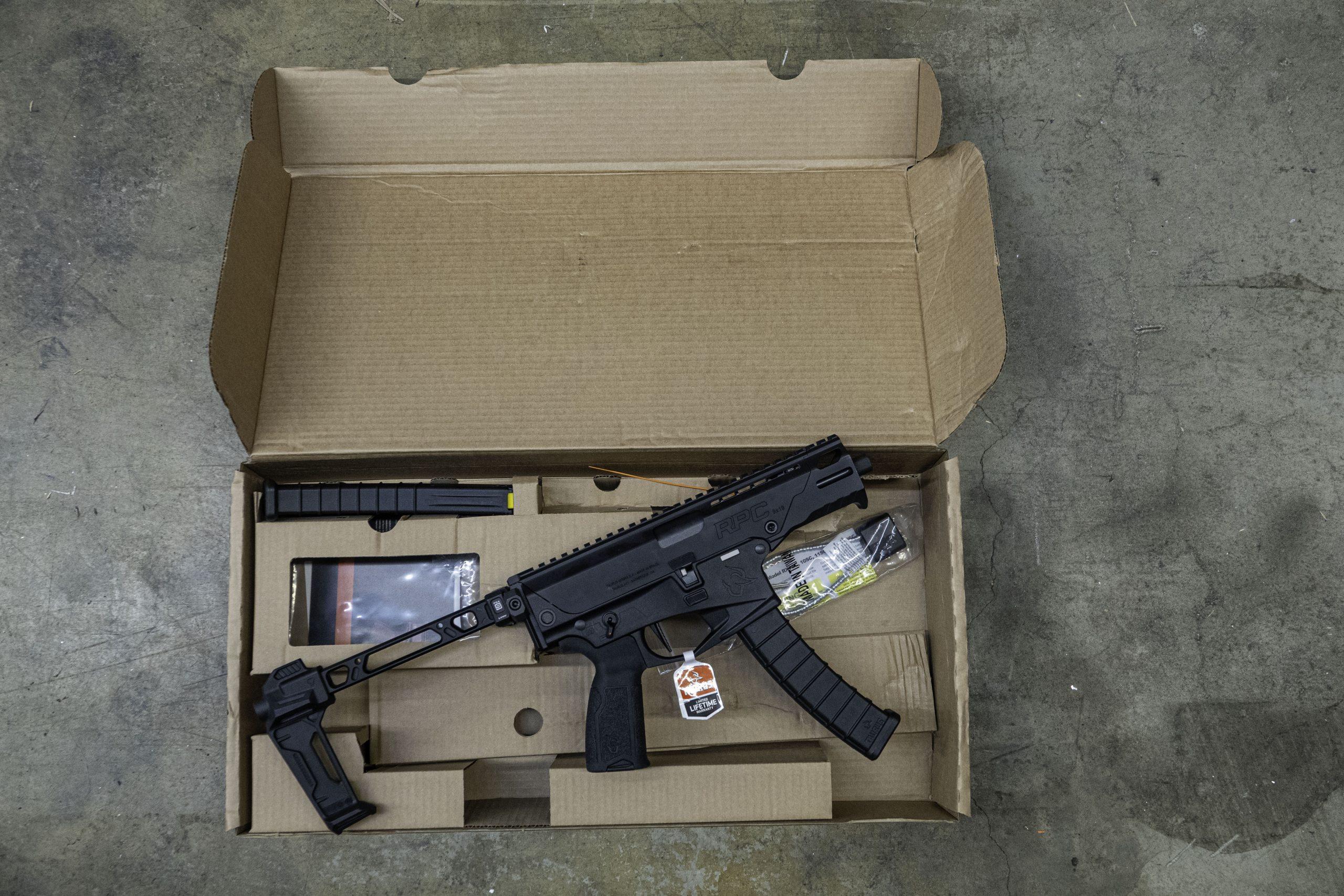
My test gun is the braced model.
Size and Weight vs. the CZ Scorpion and an MP5
Spec sheets only tell you so much, so I’ve shot the RPC alongside the two PDW-class guns I have access to: my own CZ Scorpion and my brother’s MP5-pattern gun. Here’s how the RPC stacks up against the factory specs for the most common versions of each.
| Spec | Taurus RPC | CZ Scorpion EVO 3 S1 pistol | HK SP5 |
|---|---|---|---|
Action | Roller-delayed | Straight blowback | Roller-delayed |
Barrel | 4.5″ | 7.72″ | 8.86″ |
Overall length | 12.2″ (no brace) | ~16″ | 17.8″ |
Weight (empty) | 4.5 lb (no brace) | ~5 lb | ~5.1–5.8 lb (listings vary) |
Magazine | Proprietary polymer (32 rds) | Proprietary polymer (20/30 rds) | Steel MP5 pattern (30 rds) |
In the hand, the difference is obvious. The RPC is roughly a half-pound to over a pound lighter than either one, several inches shorter, and it carries more rounds than both. At about 4.5 lbs unbraced, it’s still heavier than any handgun — roughly twice a loaded Glock 17 — but for 32 rounds of 9mm in a 12-inch package, that’s a trade I’ll take.
Controls and Ergonomics
The RPC was clearly designed for both left and right-handed shooters, and if you’ve run an AR-15, you’ll be at home in about a minute.
Safety: An ambidextrous, thumb-actuated manual safety that sweeps just like an AR selector. Taurus marks the fire position with a red triangle, so you can confirm the gun’s status at a glance. My one gripe: the levers are a bit small for how much resistance they have.
Trigger: A single-stage, flat face trigger. It feels very good for a PCC — a lot of pistol caliber carbines have long, sloppy triggers, and this one doesn’t. It isn’t light, though: American Rifleman measured theirs at just under 8 lbs.
Bolt release: There’s a bolt-stop/bolt release on both sides of the magwell. I can reach up with my trigger finger, press it to lock the bolt back, and hit the other side to drop it after a reload. The RPC also locks the bolt back on an empty magazine — something legacy MP5-style guns don’t do. Like the safety, it takes a touch more push than I expected.
Magazine release: Ambidextrous. One side pushes straight through to retract the catch; the other pivots on a link to do the same thing. Both drop mags cleanly.
Charging handle: Forward-mounted and non-reciprocating, and you can swap it to either side with a small punch.
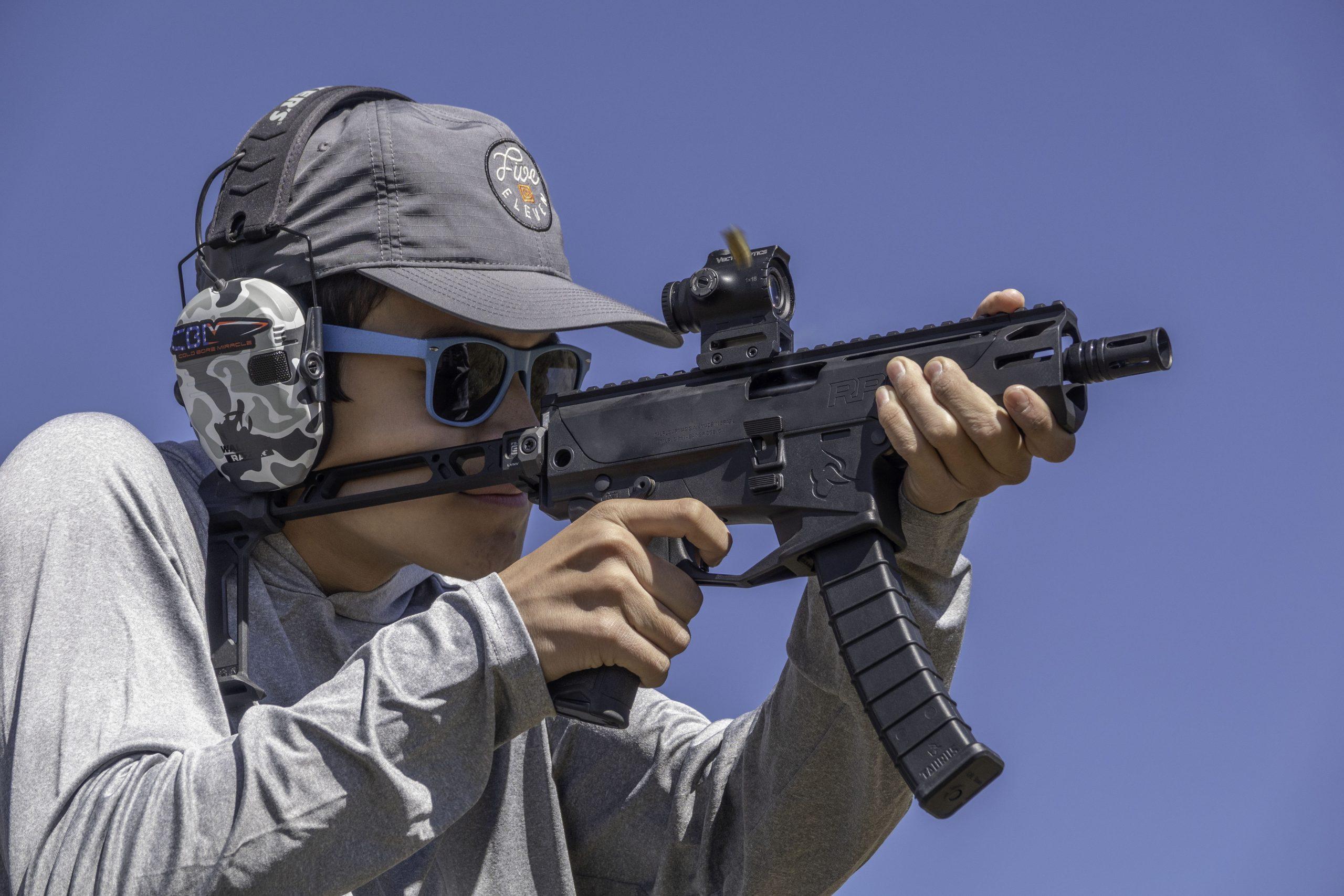
My biggest ergonomic complaint is the charging handle. It takes noticeably more force to pull than I’d like. My best guess is the roller-delayed system’s spring and locking geometry rather than something specific to the handle, but I can’t say for certain. Either way, it’s the control I’d most like Taurus to refine. It’s not a deal-breaker, but if you have limited hand strength, handle one before you buy.
With the Strike Industries folding brace extended, the length of pull is a little short for me. I don’t mind — the RPC is meant to be small, and it shoots like a pistol on steroids. The AR-pattern pistol grip gives a solid purchase, and while the short M-LOK handguard has room for a small angled foregrip, I found that just holding the gun by the magwell worked fine for me.
Reliability: My Ammo Testing Log
Over several months of range trips, I fired 300+ rounds through the RPC, including fast strings and full-magazine dumps, both suppressed and unsuppressed. The gun cycled reliably whether I fired slowly for accuracy or as fast as I could pull the trigger.
| Ammo | Bullet weight | Case | Result |
|---|---|---|---|
Federal Champion | 115gr FMJ | Brass | No malfunctions |
Magtech | 115gr FMJ | Brass | No malfunctions |
Magtech | 115gr FMJ | Steel | No malfunctions |
Winchester | 115gr FMJ | Brass | No malfunctions |
Remington | 115gr FMJ | Brass | No malfunctions |
Remanufactured | 115gr | Brass | No malfunctions |
My testing focused on standard 115gr range ammo. (For load recommendations beyond range FMJ, see our guide to the best 9mm ammo.) If you plan to shoot suppressed, 147gr subsonic is the load most people pair with a 9mm can, and it’s worth proofing in your own gun before you rely on it.
The steel-cased Magtech result matters. Cheap steel-cased 9mm is exactly what a lot of RPC owners will feed it for range days, and it ran without a hiccup.
The One Malfunction I Had (and Why It Was My Fault)
The only malfunction in my entire test wasn’t ammo-related. On the range trip after I swapped the charging handle from one side to the other, the charging handle fell out of the gun while I was shooting.
To swap sides, you press a small punch into a hole at the front of the charging block, which depresses the detent that retains the handle. When I reinstalled it, I’m fairly sure I didn’t seat it fully so the detent could snap back into place. I reseated it, it hasn’t moved since, and it never happened again.
My advice: After you swap the charging handle, give it a firm tug in both directions before you leave the bench. If it moves, it isn’t locked in. This is a single issue that’s easy to avoid, but it’s not in most reviews, and it’s the kind of thing you want to know before a range trip — not during one.
Magazine System: The Real Drawback
The RPC uses its own proprietary double-stack magazines. The bodies are molded polymer with a coil spring and a traditional sliding floorplate. The polymer is thickened at the top, where spring pressure on the cartridges is highest, and around the locking lug that holds the mag in the magwell. The slick polymer feed lips fed smoothly in my testing.
The problem isn’t how they work. It’s availability. As of this writing, there are no aftermarket magazine options for the RPC, and the mags don’t work in any other gun. Ten- and 20-round magazines are listed, but you’re buying Taurus mags or nothing.
That’s the single biggest knock on the RPC, and it’s the concern that comes up most often among other owners and reviewers too. My solution: buy extra mags up front. I’d want at least six on hand before I’d trust any proprietary-mag gun for defense.
Running the RPC Suppressed
If you’re wondering whether the RPC is a good suppressor host, it’s the reason I’d buy one.
Roller-delayed guns stay locked until chamber pressure drops, so less gas blows back through the action and toward your face. Taurus leans into that: the RPC ships with a second locking piece (the wedge). The factory-installed piece has a 110-degree angle; the included 85-degree piece reduces the locking factor on the rollers to handle the extra back pressure a suppressor adds.
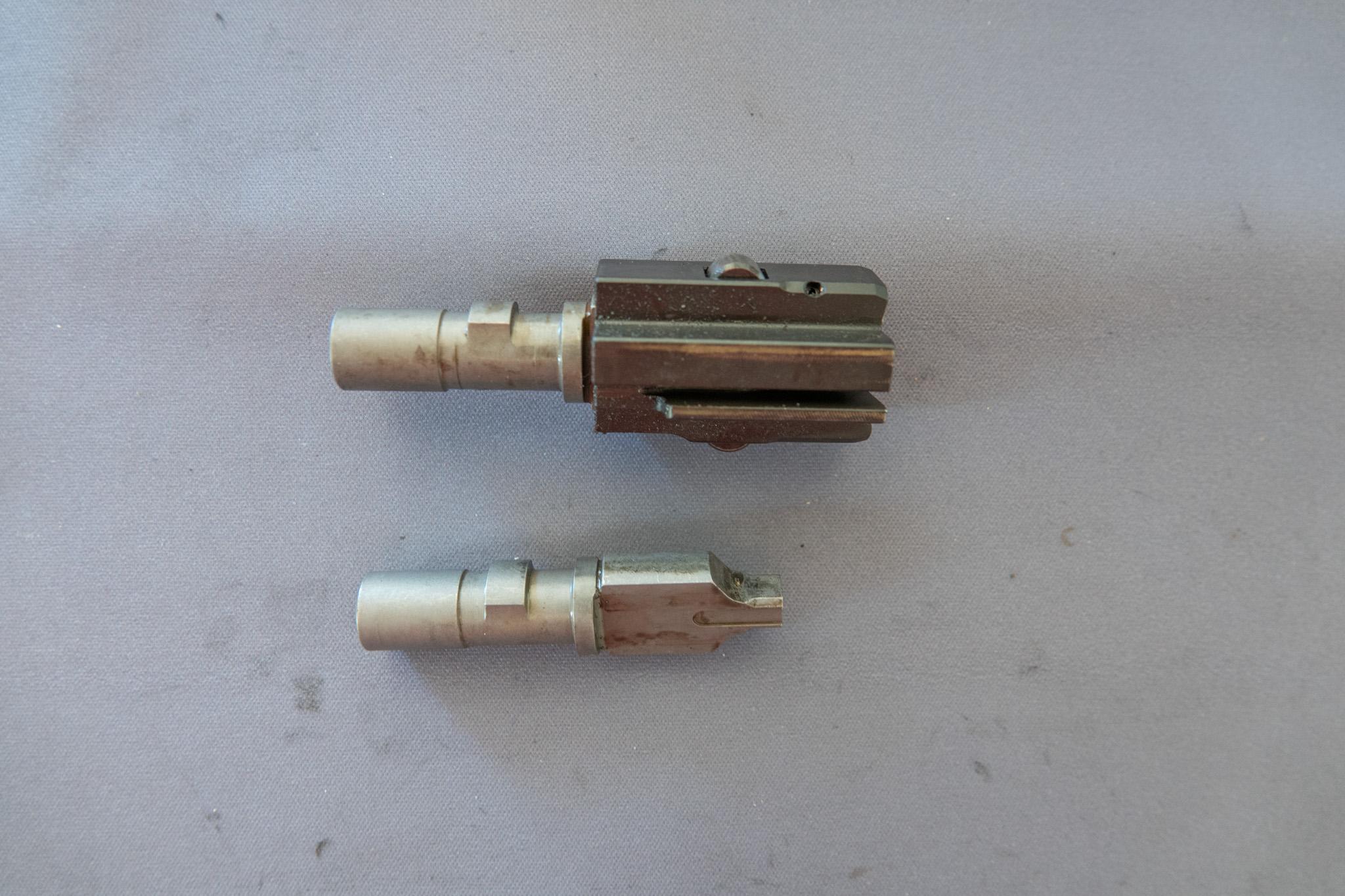
Here’s what surprised me: I found I didn’t really need the 85-degree piece. The RPC ran great suppressed either way. It’s a nice bonus to have in the box, but don’t assume you have to swap it the day you mount a can.
I shot the RPC with a couple of different suppressors. My favorite pairing was the Anechoic Fibonacci. It doesn’t use a booster assembly — the RPC’s fixed barrel doesn’t need one — and it’s light enough that it doesn’t ruin the RPC’s compact balance. The 1/2×28 threaded barrel ships with a thread protector, so it’s can-ready out of the box.
If a suppressor is in your plans, see our guide to the best 9mm suppressors and our explainer on why buying a suppressor still depends on your ZIP code.
Shooting Impressions, Recoil, and Accuracy
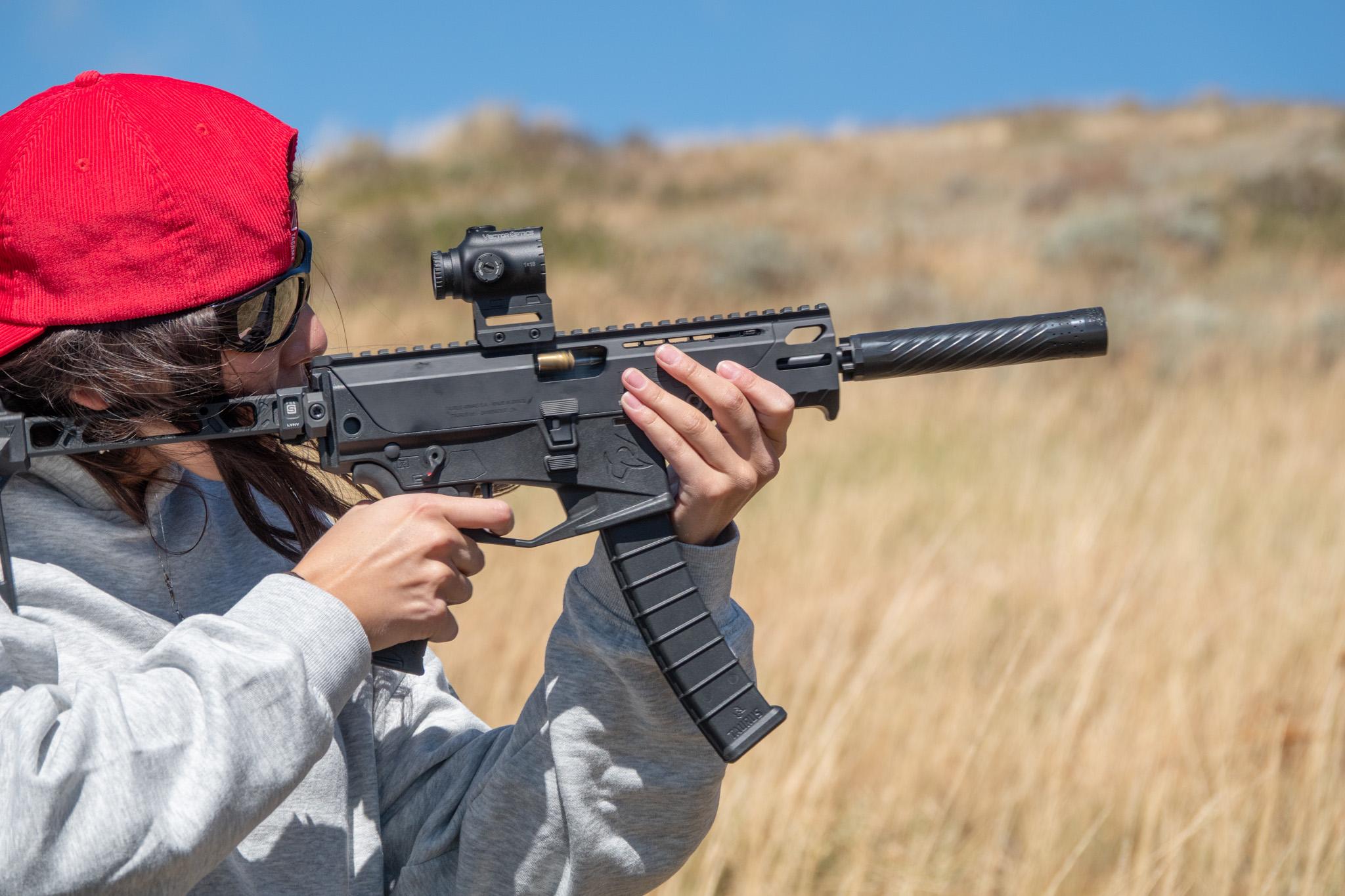
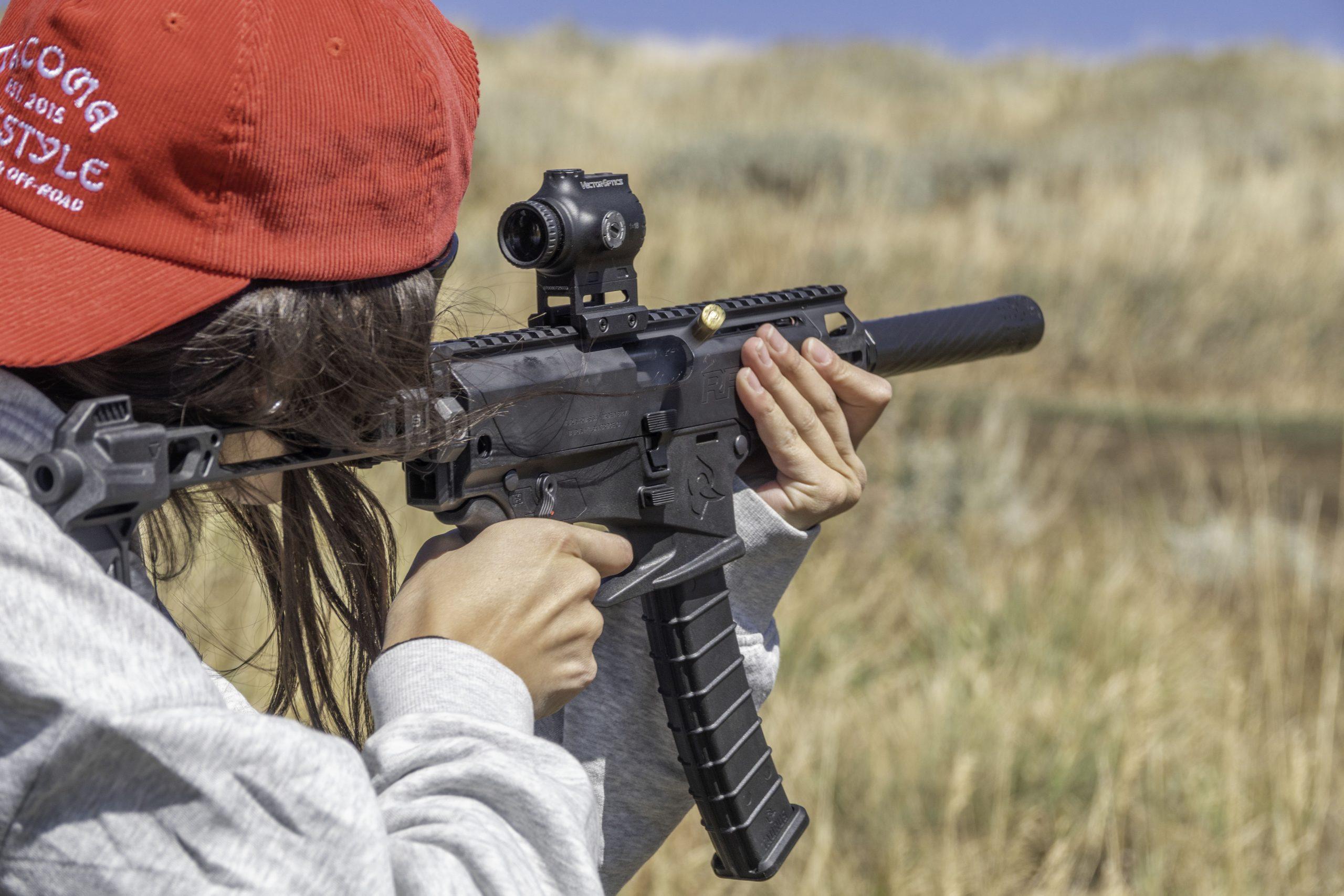
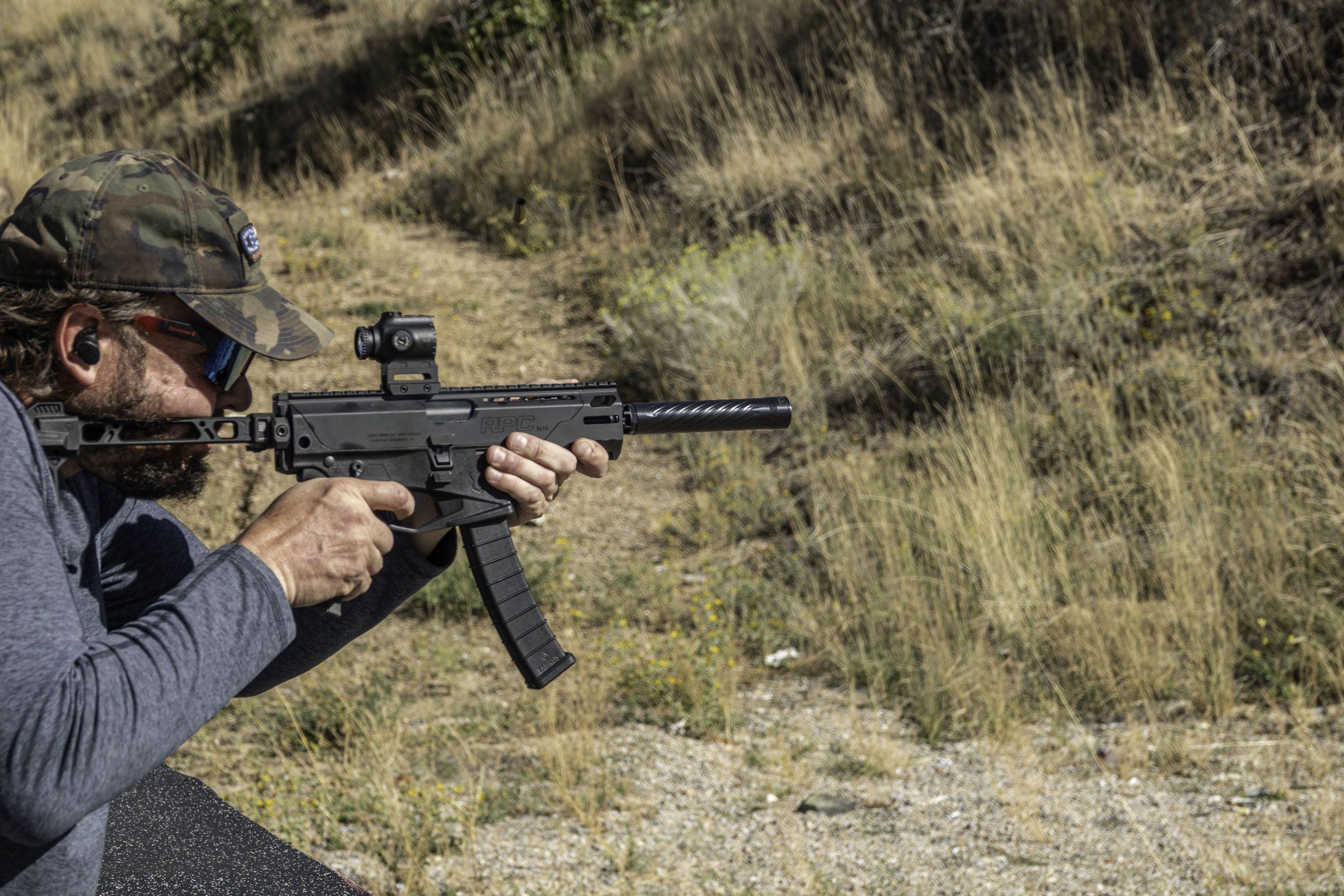
Everyone who shot the RPC came back grinning — including my kids, who shot it under close supervision. The recoil impulse is mild with very little muzzle rise, which is why it worked for smaller shooters who don’t enjoy a full-size handgun.
The Strike Industries folding brace adds a third point of contact, and I like that it folds to the side that keeps the ejection port clear.
Pistol caliber carbines aren’t known for accuracy, but the RPC exceeded my expectations. With an optic on the full length Picatinny rail, it was easy to hit 3- to 4-inch targets at 100 yards — well beyond where most people will ever use a 9mm PDW.
Accessories, Optics, and Modularity
Optics: The full-length Picatinny rail gives you room for a red dot or holographic sight plus a magnifier if you want one. See our picks for the best red dot magnifiers.
M-LOK handguard: The short handguard has M-LOK slots for a weapon light or small grip. It also has a hook at the front that keeps your support hand from drifting toward the muzzle — a smart touch on a gun this short. If you’re adding a light, our best pistol lights guide covers compact options that fit.
Weapon light battery life: On a gun this short, a compact light with a rechargeable battery keeps the package tidy; just check the battery before each range trip.
Sling: Three QD sling points. A single-point or two-point sling both work, depending on which you prefer; see our rifle sling guide.
Grip: Standard AR-15 pattern, so swapping it is easy.
Quick change barrel system: The barrel is user-removable via a rotating cam lock. That strongly suggests other barrel lengths — and maybe other calibers — down the line.
What I’d like to see next is a longer handguard to shroud a suppressor and add rail space. I’d expect companies like Midwest Industries to fill that gap as the RPC finds its market.
Build Quality
Taurus is often dismissed as a bargain brand, but the RPC doesn’t feel like one. The polymer parts are thick and fit tightly, and there’s enough metal in the lower — the RPC uses aluminum construction over a steel chassis — to make the whole gun feel solid. The upper and lower have zero wiggle, and even the magazine has very little play in the magwell.
For the life of my test so far — several months of use, much of it suppressed — the individual components have held up to at least industry-standard quality, if not better.
Is the Taurus RPC a Good Home Defense Gun?
Yes, with a caveat. The RPC is designed for home defense and close-quarters use, and several of its traits make sense there:
- Short overall length makes it easier to move through hallways and doorways than a 16-inch carbine.
- 32 rounds of 9mm with mild recoil — a shooter who flinches with a full-size handgun can run this.
- Ambidextrous controls mean anyone in your household can operate it, regardless of handedness.
- Suppressor-ready, which protects your hearing in an indoor defensive situation.
Here’s an example of where the RPC can go wrong for home defense: the magazine supply. Before I’d stage any gun for home defense, I’d want to have run its specific magazines extensively. Buy extra mags, shoot every one of them, and pick your defensive load based on what runs — our hollow point vs. FMJ comparison covers why that choice matters indoors. If you’ll keep the RPC staged by the bed, pair it with one of the best bedside gun safes. If you’re still weighing options, see our list of the best home defense guns.
Taurus RPC vs. Springfield Armory Kuna vs. MP5-Style Clones
| Feature | Taurus RPC | Springfield Armory Kuna | MP5-style clones |
|---|---|---|---|
Action | Roller-delayed | Roller-delayed | Roller-delayed |
Magazine | Proprietary polymer; no aftermarket yet | Proprietary polymer; some aftermarket support | Steel MP5 pattern; wide availability |
Last-round bolt hold-open | Yes | — | No (MP5 mags don't lock back) |
Price | Under $1,000 street | Similar | Typically higher |
Vs. the Springfield Armory Kuna: The Kuna is the RPC’s closest competitor. Both are roller-delayed with polymer mags, but Kuna mags have some aftermarket support and are a bit cheaper. Read our full Springfield Armory Kuna review.
Vs. MP5 clones: MP5 steel magazines are everywhere and proven, but they don’t lock the bolt back on empty, so you get the dreaded click. The RPC does lock back, which makes reloads faster. The RPC is also lighter and shorter than my brother’s MP5.
Vs. the CZ Scorpion: The Scorpion isn’t roller-delayed — it’s straight blowback — and that’s the difference I feel most when shooting them back-to-back. See our CZ Scorpion review and our broader pistol caliber carbines roundup.
Price, Availability, and Verdict
I can strongly recommend the Taurus RPC. After months of shooting it, it’s become one of my favorite range guns: light, compact, runs like a typewriter, and eats whatever 9mm I feed it. For a pistol caliber carbine, it’s more than accurate enough.
My bottom line:
- Best use: A suppressed home defense gun or a fun, cheap-to-shoot range PDW.
- Biggest strength: Roller-delayed softness and suppressor friendliness at a budget price.
- Biggest weakness: Proprietary magazines with no aftermarket — buy at least six up front.
- Second weakness: A stiff charging handle.
The RPC is available now at many retailers, and street prices are already falling below MSRP, which is typical of Taurus — dealers tend to sell Taurus guns well under list once supply catches up. If you’re shopping for a 9mm PCC in this price range, you owe it to yourself to handle one before buying anything else. For more from the brand, see our Taurus guns overview, our Taurus GX4 review, and our Taurus TX9 review.
Have you shot the RPC? Leave a comment with your round count and ammo results — I’m especially interested in how it runs with 147gr suppressed.
FAQ
Is the Taurus RPC roller delayed?
What magazines does the Taurus RPC use?
How much does the Taurus RPC cost?
Is the Taurus RPC reliable?
Is the Taurus RPC a good suppressor host?
Does the Taurus RPC have a threaded barrel?
What's the overall length of the Taurus RPC?
Can left-handed shooters use the Taurus RPC?
Meet the Experts

Written By
Michael Crites
Licensed Concealed Carry Holder
- Founder of AmericanFirearms.org
- Licensed Concealed Carry Holder
Hands-On Product Reviews
Further Reading


Sign up for our newsletter
Get discounts from top brands and our latest reviews!
Our Top Picks
Taurus RPC